

OT Cyber Fusion Services
OT Incident ResponseRapid. Safe. Effective.
Restore Operations with Confidence.
When an incident hits your industrial environment, every minute matters. We respond fast, contain the threat, and restore safe operations while preserving evidence and minimizing business impact.
- 24/7 Availability
- OT-Safe Methodology
- Industry-Tested Playbooks
- Operational Continuity Focus
- Vendor Neutral
The Reality of OT Incidents
OT Incident Response contains the threat and restores safe operations when an incident hits an industrial environment, while preserving evidence and minimizing business impact. OT incidents are rising in frequency, complexity, and impact. Most organizations are not fully prepared.
- 88%
- of tabletop exercises revealed degraded detection capabilities.— Dragos OT Cybersecurity Year in Review, 2026
- 30%
- of incident response cases begin with unexplained operational issues.— Dragos OT Cybersecurity Year in Review, 2026
- 49%
- increase in ransomware groups impacting industrial organizations during 2025.— Dragos OT Cybersecurity Year in Review, 2026
- $5.50M
- average cost of a data breach in the industrial sector.— IBM Cost of a Data Breach, 2026
Incidents impact operations
- Unplanned downtime
- Safety and environmental risk
- Regulatory and reporting exposure
- Reputation and customer trust
- Financial and insurance impact
Incident Response Process
A proven, OT-safe process to contain threats and restore operations.
Detect & Triage
Validate the alert, assess severity, and activate the response.
Contain
Stabilize the environment and prevent further adversary movement.
Eradicate
Remove the threat, close attack paths, and monitor closely.
Recover
Restore systems and operations with a validated process.
Investigate
Preserve evidence, determine root cause, and analyze impact.
Report & Improve
Deliver actionable reports and strengthen defenses to prevent recurrence.






We coordinate every step with your team to protect safety, reliability, and production.
What We Do in an Engagement
Our team integrates with your people and processes to deliver rapid, effective response.
- Rapid Mobilization
- Engage the right experts quickly, day or night.
- Incident Command
- Establish clear command, communication, and decision-making.
- Threat Containment
- Stop the attack while maintaining operational safety.
- Evidence Preservation
- Collect and protect evidence for analysis and compliance.
- Recovery Support
- Restore systems safely and validate operations.
- Root Cause Analysis
- Determine how the incident occurred and what was affected.
- Executive Communication
- Deliver clear, timely updates for leadership and stakeholders.
Our Priorities
- Stabilize Operations
- Contain the incident and keep critical processes running safely.
- Preserve Evidence
- Collect and protect digital evidence to support investigations and regulatory requirements.
- Provide Clarity
- Deliver accurate findings and clear recommendations for recovery and improvement.
Key Deliverables
Clear, actionable deliverables that support recovery, compliance, and future resilience.
Incident Response Report
Detailed account of the incident, actions taken, and outcome.
Root Cause Analysis
Explanation of how the incident occurred and what was impacted.
Evidence Collection Summary
Overview of evidence collected and preserved.
Recovery Validation Report
Confirmation that systems are restored and functioning as intended.
Recommendations
Prioritized actions to reduce risk and improve resilience.
How Mithryl Systems Is Different
Our approach, experience, and focus deliver better outcomes when it matters most.
OT-First Mindset
Our team has deep operational and industrial experience, not just IT security.
OT-Safe Response
We use methodologies and tools designed specifically for industrial environments.
Real-World Experience
Hundreds of industrial incidents and thousands of hours in the field.
Integrated Intelligence
Connected to our MDR, threat intelligence, and detection engineering teams.
Executive Focus
We communicate in business terms and help leaders make confident decisions.
Vendor Neutral
We work with your tools, processes, and teams. No rip and replace.
Business Outcomes
We help you restore operations and emerge stronger.
Minimize Downtime
Reduce the duration and impact of operational disruption.
Protect Safety
Maintain safe operations and reduce the risk to people and the environment.
Maintain Compliance
Meet regulatory and reporting requirements with confidence.
Reduce Financial Impact
Limit recovery costs, ransomware impact, and insurance exposure.
Improve Resilience
Strengthen defenses and processes to prevent future incidents.
Executive Confidence
Receive clear information to make informed decisions fast.
Resources & Insights
Showing 6 of 6 resources.
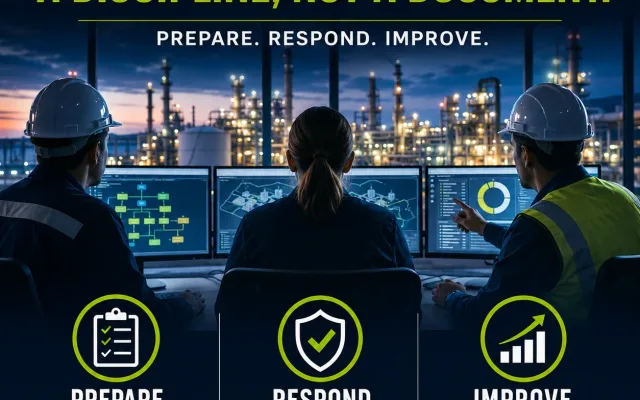
Article
When Playbook Meets Adversary
Read article
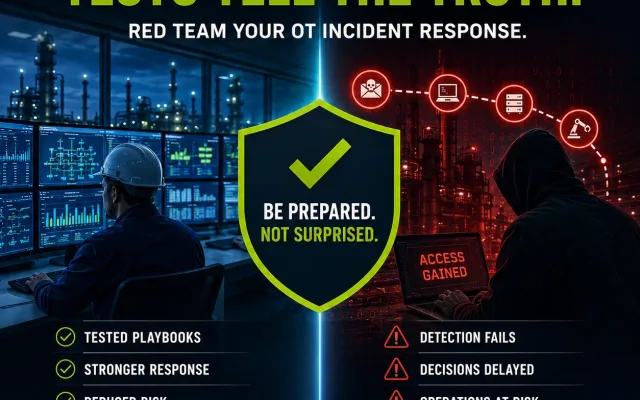
Article
OT IR as Operational Discipline
Read article
Article
The Leadership Layer, Part 9: Deciding Under Pressure
Read article
Article
How the Red Team Walks In Through the Front Door of OT
Read article

Webinar
Turning Compliance Into Operational Readiness
Watch now

Podcast
Energy Systems: Real Threats. Real Consequences
Listen now
Frequently Asked Questions
What is OT Incident Response?
OT Incident Response is the coordinated process of identifying, containing, investigating, and recovering from cybersecurity incidents affecting Operational Technology (OT) environments. Mithryl Systems helps organizations respond quickly while protecting people, production, safety, and operational continuity.
Unlike traditional IT Incident Response, OT Incident Response prioritizes safe recovery and operational decision making alongside cybersecurity objectives.
How is OT Incident Response different from traditional IT Incident Response?
Traditional IT Incident Response focuses primarily on protecting data, restoring systems, and minimizing information security risk.
OT Incident Response addresses cyber events that can directly impact industrial operations, physical processes, production, and safety. Every response decision considers operational consequences before containment actions are taken.
Our goal is to restore secure operations without creating unnecessary disruption.
What happens during an OT cybersecurity incident?
Every incident is unique, but most engagements follow a structured process:
- Detect and validate the incident.
- Stabilize the operational environment.
- Contain malicious activity safely.
- Investigate attacker actions and operational impact.
- Preserve digital evidence.
- Restore operations.
- Deliver findings and recommendations to strengthen future resilience.
This disciplined approach helps organizations recover safely while learning from the event.
How quickly can Mithryl Systems respond?
Response time depends on the engagement model and support agreement in place.
For customers with active response services, Mithryl Systems begins incident coordination immediately upon notification. Our team works with customer personnel to assess the situation, establish communications, stabilize operations, and begin coordinated response activities as quickly as possible.
Rapid response is essential because operational downtime can have significant business consequences.
Will Incident Response interrupt production?
Our objective is to minimize operational disruption whenever possible.
Unlike traditional IT response models that may immediately isolate affected systems, Mithryl Systems evaluates operational consequences before recommending containment actions.
Response decisions are coordinated with customer stakeholders to balance cybersecurity risk with production, safety, and operational continuity.
What industries does Mithryl Systems support?
Mithryl Systems provides OT Incident Response services for organizations operating industrial and critical infrastructure environments.
Our experience includes:
- Electric Utilities
- Renewable Energy
- Oil and Gas
- Manufacturing
- Water and Wastewater
- Transportation
- Critical Infrastructure
- Industrial Facilities
Our methodology is designed around operational technology rather than a specific industry.
What activities are performed during an OT Incident Response engagement?
Typical engagement activities include:
- Incident validation
- Threat containment
- Operational risk assessment
- Digital evidence preservation
- Root cause analysis
- Executive communications
- Recovery planning
- Operational restoration
- Lessons learned
- Improvement recommendations
Every engagement is tailored to the operational requirements of the customer.
What deliverables will we receive?
Each engagement produces actionable deliverables for both technical teams and executive leadership.
Typical deliverables include:
- Incident Response Report
- Root Cause Analysis
- Evidence Collection Summary
- Recovery Validation Report
- Executive Summary
- Prioritized Recommendations
These reports provide clear documentation for recovery, compliance, governance, and future improvements.
How does OT Incident Response differ from Digital Forensics?
Incident Response focuses on containing threats and restoring safe operations.
Digital Forensics focuses on collecting and analyzing evidence to determine exactly what occurred, how the attacker operated, and what systems were affected.
The two disciplines work together, but they serve different purposes. Incident Response restores operations, while Digital Forensics establishes facts and supports long-term learning, regulatory reporting, and legal requirements.
Do you preserve digital evidence during an incident?
Yes.
Evidence preservation is integrated into every OT Incident Response engagement.
Our investigators collect, protect, and document digital evidence using forensically sound methods to support root cause analysis, regulatory reporting, legal requirements, insurance claims, and future investigations.
Can Mithryl Systems help improve our response process after an incident?
Yes.
Every engagement concludes with recommendations designed to improve operational resilience.
Recommendations commonly include:
- Detection improvements
- Incident Response playbook enhancements
- Operational communication improvements
- Detection Engineering opportunities
- Recovery process improvements
- Risk reduction priorities
- Governance recommendations
Our objective is not simply to recover from an incident, but to help prevent similar events in the future.
Does OT Incident Response support regulatory reporting?
Yes.
Mithryl Systems provides documented findings and evidence that can support cybersecurity reporting obligations, internal investigations, executive briefings, regulatory inquiries, and compliance initiatives.
Our reports help organizations demonstrate due diligence while improving operational understanding of cybersecurity events.
What makes Mithryl Systems different from other Incident Response providers?
Most Incident Response providers focus primarily on cybersecurity.
Mithryl Systems combines cybersecurity expertise with operational understanding.
Our responders consider:
- Production impact
- Safety implications
- Reliability requirements
- Engineering constraints
- Operational risk
- Executive decision making
Every recommendation is evaluated through the lens of operational continuity rather than cybersecurity alone.
Will Mithryl Systems work with our internal security team?
Yes.
Our Incident Response services are designed to complement existing IT, OT, engineering, operations, and executive teams.
We work collaboratively with customer personnel, third-party responders, legal counsel, insurers, and external stakeholders to ensure a coordinated response throughout the incident.
Can Incident Response improve our cybersecurity maturity?
Yes.
Every incident provides an opportunity to strengthen cybersecurity.
By identifying root causes, validating controls, improving detections, refining playbooks, and enhancing operational coordination, organizations emerge from incidents with stronger cybersecurity capabilities and greater operational resilience.
How do I prepare before an incident occurs?
Preparation is one of the most effective ways to reduce operational risk.
Organizations should establish:
- Incident Response playbooks
- Communication procedures
- Asset inventories
- Detection capabilities
- Recovery processes
- Executive decision frameworks
- Digital Forensics readiness
- Regular tabletop exercises
Preparing before an incident significantly improves response speed and decision quality.
How do I get started with Mithryl Systems OT Incident Response?
The best place to begin is by downloading the OT Incident Response Executive Guide to understand our response methodology and operational approach.
Organizations seeking additional preparedness can also schedule a conversation with a Mithryl Systems expert to review Incident Response readiness, existing capabilities, and opportunities to improve operational resilience before an incident occurs.
Need Help Responding to an Incident?
Our experts are ready to help you contain threats, restore operations, and reduce risk safely and effectively.