

OT Cyber Fusion Strategies
OT Cyber Fusion StrategiesUnify teams. Align priorities.
Strengthen operational resilience.
Mithryl Systems helps organizations design an OT Cyber Fusion operating model that connects people, processes, technology, and intelligence across IT and OT, so everyone operates from the same understanding of risk and the same commitment to operational outcomes.
- Executive Alignment
- Break Down Silos
- Risk-Based Decisions
- Operational Resilience
- Measurable Impact
What Is an OT Cyber Fusion Strategy?
An OT Cyber Fusion Strategy is a coordinated operating model that aligns security, operations, engineering, governance, technology, and intelligence around shared operational risks and business priorities.
Cyber Fusion Strategy is not
- Another security platform
- An OT MDR service
- A SOC reorganization
- A one-time assessment
- IT/OT network integration
- A technology replacement program
Why IT and OT Silos Weaken Operational Resilience
Fragmented model
- Security owns alerts
- Operations owns production
- Engineering owns control systems
- Compliance owns evidence
- Executives receive disconnected reporting
Cyber Fusion model
- Shared intelligence and context
- Defined decision rights
- Coordinated response and recovery
- Common risk language
- Unified executive visibility
The Cyber Fusion Operating Model
Five interconnected layers that turn strategy into operational advantage.
1. Leadership & Governance
Define decision rights, accountability, risk ownership, and executive oversight.
2. People & Collaboration
Bring together security, operations, engineering, compliance, legal, and leadership.
3. Process & Coordination
Align workflows for detection, escalation, response, reporting, and continuous improvement.
4. Technology & Telemetry
Integrate tools, sensors, and data sources to create complete operational visibility.
5. Intelligence & Decision Support
Transform data and threat intelligence into insight that drives confident decisions.
Operational Intelligence
Protect Operations. Improve Resilience. Operate With Confidence.
How We Build Your Cyber Fusion Strategy
Assess
Understand your current state, maturity, risks, and business objectives.
Align
Align leadership, security, operations, engineering, and compliance priorities.
Design
Design governance, workflows, roles, decision rights, and reporting.
Integrate
Integrate intelligence, telemetry, tools, and teams into a coordinated model.
Operationalize
Implement with playbooks, cadence, metrics, and leadership support.
Measure & Improve
Measure adoption, resilience, risk reduction, and business impact continuously.






What the Strategy Includes
 Governance and decision rights
- IT and OT operating model
- Cyber Fusion processes and workflows
- Technology and telemetry strategy
- Incident and resilience integration
- Executive intelligence and reporting
From Strategy to Execution
Your strategy defines how these capabilities work together. We help you execute with the right combination for your environment and risk profile.
- OT MDR24x7 visibility and managed response.
- Detection EngineeringBuild and optimize detections.
- Threat HuntingProactively uncover hidden threats.
- Incident ResponseContain, recover, and restore operations.
- Digital ForensicsDetermine what happened.
- Red Team AssessmentsValidate defenses and resilience.
- vCISO ServicesOngoing leadership and oversight.
Integrated. Coordinated. Measurable.
What You Receive
Tangible deliverables that create clarity, alignment, and measurable progress.
- OT Cyber Fusion Strategy & Roadmap
- Technology & Telemetry Integration Priorities
- Current State & Maturity Assessment
- Executive Reporting Framework
- Governance & Decision Rights Model
- Incident & Resilience Alignment Plan
- IT & OT Collaboration Framework
- Implementation Roadmap
- Cyber Fusion Workflow Design
- Measurement & Continuous Improvement Model
Business Outcomes
Stronger leadership. Lower risk. Measurable impact.
Break Down Silos
Unify teams around shared goals and operational risk.
Improve Decision Speed
Accelerate decisions with clear authority and better context.
Strengthen Resilience
Build capability to anticipate, respond, and recover faster.
Align With Business
Connect cybersecurity investments to business priorities.
Increase Visibility
Deliver clear, consistent executive and board visibility.
Maximize Investments
Integrate tools and data to get more from what you already have.
Resources & Insights
Showing 7 of 7 resources.
Article
Strategy, Not Scorecards
Read article
Article
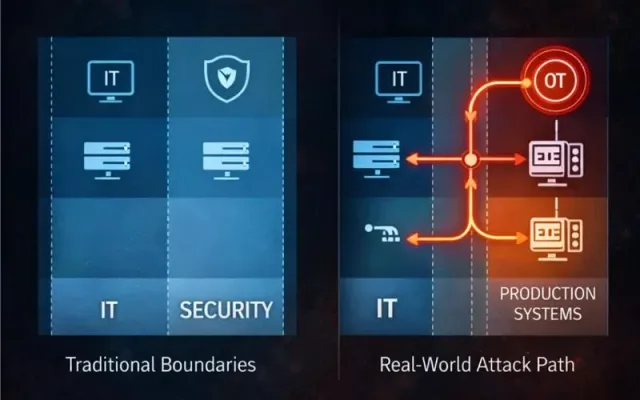
Attack Paths Don't Care About Your Org Chart
Read article
Article
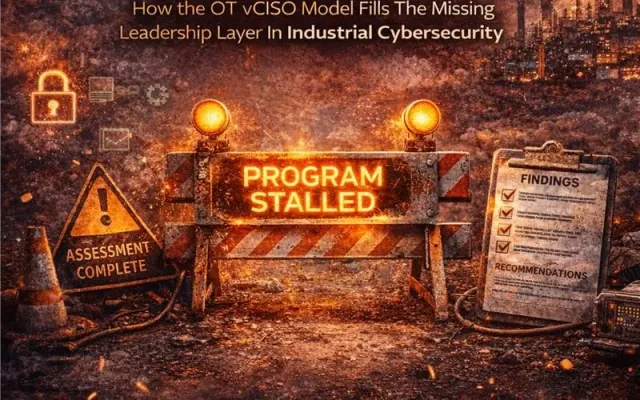
Exposing the Leadership Gap
Read article
Article
Governing Legacy OT Risk
Read article
Article
The Compliance Trap: What the Red Team Finds That Audits Miss
Read article

Podcast
The Role of the OT vCISO
Listen now

Webinar
Executive OT Cyber Visibility: What Boards Actually Need to See
Watch now
Frequently Asked Questions
What is an OT Cyber Fusion Strategy?
An OT Cyber Fusion Strategy is an executive operating model that aligns cybersecurity, operations, engineering, technology, governance, and intelligence around shared operational risk and business priorities.
Rather than treating cybersecurity as a separate function, Mithryl Systems helps organizations create a unified approach where IT and OT teams share context, coordinate decisions, and improve operational resilience.
How is an OT Cyber Fusion Strategy different from OT MDR?
OT Managed Detection and Response (OT MDR) is one operational capability within a broader OT Cyber Fusion Strategy.
Cyber Fusion defines how people, processes, technology, governance, and operational intelligence work together across the organization. OT MDR delivers continuous monitoring, threat detection, investigation, and guided response within that strategic framework.
A Cyber Fusion Strategy provides the operating model. OT MDR helps execute it.
Why do IT and OT silos create operational risk?
When IT and OT teams operate independently, they often have different priorities, tools, reporting structures, and visibility into cyber threats.
These disconnects can lead to:
- Slower incident response
- Conflicting priorities
- Poor executive visibility
- Duplicate investments
- Missed operational risks
- Delayed decision making
Cyber Fusion brings these teams together around shared operational outcomes rather than isolated technical objectives.
Why should executive leadership care about Cyber Fusion?
Cyber incidents in industrial environments affect more than information systems. They can impact production, safety, regulatory compliance, customer commitments, and revenue.
An OT Cyber Fusion Strategy helps executives:
- Understand operational cyber risk
- Prioritize investments
- Improve cross-functional decision making
- Increase organizational resilience
- Align cybersecurity with business strategy
The result is better executive visibility and more informed decisions.
What is Operational Intelligence?
Operational Intelligence is the ability to combine cybersecurity telemetry, operational data, engineering expertise, threat intelligence, and business context into actionable decisions.
Rather than simply generating alerts, Operational Intelligence helps organizations understand:
- What happened
- Why it matters
- Which operations are affected
- What actions should be taken
- Which risks deserve immediate attention
This enables faster, more confident executive and operational decisions.
What does an OT Cyber Fusion operating model include?
A Cyber Fusion operating model typically includes:
- Executive governance
- Risk ownership
- Cross-functional collaboration
- Integrated workflows
- Shared operational intelligence
- Technology and telemetry integration
- Incident coordination
- Executive reporting
- Continuous improvement
Each capability works together to strengthen operational resilience.
Is Cyber Fusion a technology platform?
No.
Cyber Fusion is not a software platform or product.
It is an operational strategy that defines how people, processes, technology, governance, and intelligence work together.
Mithryl Systems integrates with your existing technologies rather than requiring organizations to replace them.
Can Cyber Fusion work with our existing security tools?
Yes.
Mithryl Systems is vendor neutral.
Our Cyber Fusion Strategy builds upon existing investments, including:
- SIEM platforms
- OT monitoring platforms
- EDR solutions
- Asset management systems
- Threat intelligence platforms
- Vulnerability management tools
- Engineering systems
The objective is to improve coordination and operational visibility without requiring a rip-and-replace approach.
How do you build an OT Cyber Fusion Strategy?
Our methodology follows six phases:
- Assess the current operating model.
- Align executive priorities and governance.
- Design integrated workflows.
- Connect technology and operational intelligence.
- Implement coordinated operating processes.
- Measure business outcomes and continuously improve.
Each phase builds upon the previous one to create a sustainable operational model.
What deliverables will we receive?
Typical deliverables include:
- OT Cyber Fusion Strategy
- Executive Roadmap
- Governance Framework
- Current State Assessment
- Operational Risk Assessment
- Technology Integration Recommendations
- Workflow Design
- Incident Coordination Framework
- Executive Reporting Framework
- Continuous Improvement Plan
Deliverables are tailored to each organization's operational environment.
How long does a Cyber Fusion Strategy engagement take?
Engagement length depends on organizational complexity, operational maturity, and project objectives.
Most organizations begin with an executive assessment and strategy engagement, followed by phased implementation and ongoing advisory support as the operating model matures.
Does Cyber Fusion replace our SOC or IT team?
No.
Cyber Fusion strengthens existing teams rather than replacing them.
It improves collaboration between cybersecurity, operations, engineering, compliance, leadership, and business stakeholders by providing shared visibility, coordinated workflows, and common decision-making processes.
How does Cyber Fusion support OT Incident Response?
Cyber Fusion improves incident response by ensuring that security teams, operations, engineering, and executive leadership all share the same operational context.
This enables:
- Faster investigations
- Better communication
- More effective coordination
- Reduced operational disruption
- Better executive decisions
The focus is on restoring operations safely while minimizing business impact.
How does Cyber Fusion improve operational resilience?
Operational resilience depends on more than cybersecurity tools.
Cyber Fusion improves resilience by:
- Breaking down organizational silos
- Improving executive visibility
- Aligning technology investments
- Standardizing decision making
- Coordinating response activities
- Strengthening governance
- Enabling continuous improvement
Together these capabilities reduce operational risk and improve organizational readiness.
How does Cyber Fusion support compliance?
Rather than treating compliance as a separate initiative, Cyber Fusion integrates regulatory requirements into everyday operational processes.
This helps organizations align with frameworks such as:
- IEC 62443
- NERC CIP
- TSA Security Directives
- NIST Cybersecurity Framework
- NIST SP 800-82
Compliance becomes part of operational governance rather than an isolated project.
What business outcomes should we expect?
Organizations implementing an OT Cyber Fusion Strategy typically improve:
- Executive decision making
- Cross-functional collaboration
- Operational visibility
- Cybersecurity governance
- Incident coordination
- Investment prioritization
- Operational resilience
- Business continuity
- Risk management
The ultimate objective is to help organizations operate more safely, confidently, and efficiently.
How do I get started with an OT Cyber Fusion Strategy?
Organizations typically begin with an executive strategy session to evaluate their current operating model, identify organizational silos, assess operational risk, and prioritize improvement opportunities.
Mithryl Systems then works with leadership to build a practical Cyber Fusion roadmap that aligns cybersecurity, operations, engineering, and executive governance around measurable business outcomes.
Ready to Build a Unified Cybersecurity Strategy?
Bring your teams together, align your priorities, and turn risk into operational advantage.